Grey Skies, Sharp Light: A Practical Lens Guide for British Winter Glare
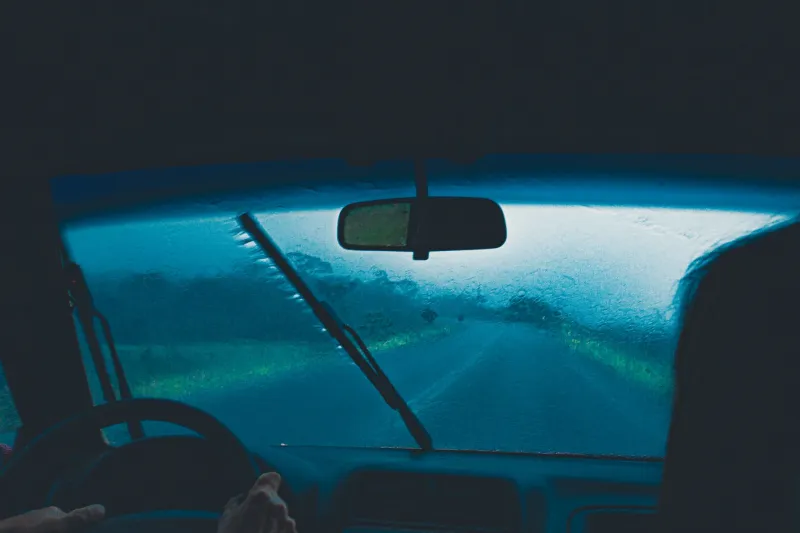
British winter light does not arrive with a fanfare. It arrives sideways, at about 10am, under the brim of your hat and straight into your eyes while you are waiting for a bus. By 3pm it has turned the wet A-road into a mirror. This is not summer glare. It is low-angle, reflective and often wrapped in grey. The right sunglasses for a UK winter are less about looking holiday-ready and more about seeing the kerb, the cyclist and the gap between the bus and the pavement.
Why winter glare is a different problem
In June the sun is high overhead. In November it barely clears the rooftops, which means light comes at you horizontally rather than from above. That low angle slips under visors, through bare trees and across shop windows. Add damp roads, puddles and wet roofs and you get a double hit: direct low sun plus reflected glare from the ground. Even a flat grey day can carry plenty of UV, and a bright overcast sky can be more tiring than blue sky because the whole scene is luminous. Winter lenses need to manage contrast and reflection, not simply make everything darker.
Polarised lenses: brilliant on wet roads, not always the whole answer
Polarised lenses are the obvious first thought for British winter driving. They filter horizontal light bouncing off wet tarmac, car bonnets and puddles, which is exactly the kind of glare that makes a commute feel like a video game with the brightness turned up. For motorway slogs, parked-car reflections and dog walks beside a canal, polarisation earns its keep.
The caveat is that polarised lenses can interact oddly with some screens and dashboard displays, especially when you tilt your head. Some drivers find certain sat-navs or instrument panels harder to read through a polarised lens. It is worth testing a pair in the car before you commit. Polarisation is also not the same thing as UV protection, so check for a UV400 label or equivalent. A cheap dark lens without proper UV filtering is not doing your eyes any favours.
Category 2 or category 3? Reading the British sky
Lens categories are a useful shorthand for how much light gets through. Category 2 lenses are a good all-rounder for the UK's stop-start winter light: bright enough for low sun, light enough for overcast afternoons and legal for daytime driving. Category 3 lenses are darker and better for those sharp, bright winter days when the sun sits right on the horizon and the road looks wet even when it is not. Category 4 is too dark for driving and best left to high-mountain conditions, not the M25.
Tint colour matters as much as darkness. Brown and amber lenses warm up a grey scene and boost contrast, which can be helpful when you are trying to spot potholes, wet leaves or a cyclist in a dark jacket. Grey lenses keep colours neutral and are easy to live with. Green lenses are soothing over long periods and work well in mixed light. Rose tints can flatter in fashion terms but are less useful for driving, so keep them for weekends.
Photochromic lenses and the commute
Photochromic lenses darken in response to UV and fade back to clear indoors. For the walk to the station, the dog walk at lunch and the trudge home after dark, they are quietly brilliant. You do not have to swap frames when the sky changes its mind every twenty minutes.
There are two practical catches. First, car windscreens block most UV, so photochromic lenses may not darken much while you are driving. Second, cold weather can slow the fade-back time. If you are choosing a pair for commuting, look for a fast-reacting photochromic lens and a frame you are happy to wear indoors for a few minutes. They are a convenience rather than a substitute for a proper pair of dark driving sunglasses.
Mirror coatings for low sun
Mirror coatings reflect light away from the eye and can be genuinely useful when the sun is low and relentless. A silver or blue mirror looks sharp and keeps the view neutral. A gold or copper mirror adds warmth on grey days and pairs well with tortoiseshell frames. Mirrors are also more prone to showing scratches, so if you are the sort of person who throws sunglasses into a bag with keys, choose a hard case or a cheaper pair for rough duty.
Driving-friendly details
For winter driving, shape and fit matter as much as lens technology. A wrap or curved frame stops light leaking in at the sides, while thin temples are more comfortable under a hat or with headphones. An anti-reflective coating on the back of the lens reduces bounce-back from your own face. Keep a spare pair in the glovebox, but not a category 4 pair. At dusk, switch to clear lenses or simply take your sunglasses off. The legal limit for driving is category 0 to 3, and common sense matters more than any label when the light is fading.
Commutes, dog walks and Christmas market weekends
For the commute, a category 2 polarised pair in grey or brown is the sensible default. It handles wet roads, low sun and the glare from bus windows without turning the world into a cave. Slim temples make them easier to wear with a beanie or over-ear headphones.
For dog walks, photochromic or category 2 lenses are ideal. You want something that stays put when you are bending down for a lead, and a wrap shape helps stop wind and side glare. If you walk beside water, polarisation is a small luxury.
For Christmas market weekends, think practical style. Wet cobbles and fairy lights create a lot of reflected brightness, so a category 3 lens or a light mirror is useful. Choose a frame that can go into a coat pocket without drama. Mulled wine, crowded stalls and a sudden move indoors are not the moment for delicate nose pads or a frame you are terrified to scratch.
The bottom line
A British winter does not need a beach wardrobe. It needs one pair for wet-road commutes and grey afternoons, and optionally a darker or mirrored pair for bright low sun. Check the UV rating, choose a tint that helps contrast rather than just dims the view, and remember that the best winter sunglasses are the ones you actually keep in your bag.