Oxblood, Olive and Slate: The Frame Colours Doing the Work in 2026

British light has a reputation problem. It is not the blazing, high-contrast light of a catalogue shoot, and it rarely behaves like the Mediterranean fantasy behind most sunglasses displays. It is softer, cooler and more changeable: a grey morning that turns bright by lunch, a low winter sun that catches the edge of a building, a cloudy afternoon with a surprising amount of glare. That matters when you are choosing frame colour. A shade that looks punchy on a white background can turn muddy on a real face in real British weather; a quieter colour can suddenly look considered and expensive.
In 2026, the strongest frame colours are not the loudest ones. They are the shades with enough depth to hold their own against grey skies, but enough warmth or clarity to stop everything feeling heavy. Think oxblood rather than pillar-box red, olive rather than acid green, slate blue rather than bright navy. Here are six shades worth trying this year, and how to make them work beyond a fortnight in August.
Why British light changes the colour game
Under a flat grey sky, colours lose a little saturation. Very pale frames can disappear; very dark frames can look like a solid black line. The sweet spot is a mid-tone with some richness. Warm colours — oxblood, honey, soft tortoise — add life to the face when the light is dull. Cool colours — slate blue, smoky mauve — look sharp without shouting when the sun finally appears. If you have a wardrobe full of navy, charcoal, denim and camel, you already have the backdrop. The frame just needs to add a bit of contrast, not compete with the coat.
1. Oxblood: the grown-up red
Oxblood is the colour that keeps on giving. It reads almost brown in low light, then reveals a deep red when the sun hits it. That makes it far more wearable than a true red frame, especially in the UK, where a bright red can look a bit seasonal — lovely in July, slightly panto in February. Oxblood works with navy coats, grey knitwear, denim and black. It also flatters a wide range of skin tones because it sits between warm and cool rather than picking a side.
Styling note: keep the rest of the outfit simple. An oxblood frame with a camel scarf and dark coat is enough. High-street pick: look for slim oval or soft square shapes in matte acetate at John Lewis or M&S; the colour looks more modern when the frame is not too chunky.
2. Olive: the quiet utility shade
Olive has been creeping up for a few seasons, and in 2026 it feels properly settled. It is especially good in Britain because it echoes the colours of the landscape without looking like camouflage. On the face, olive can read green, grey or brown depending on the light, which makes it a useful neutral. It suits warmer skin tones particularly well, but a cool, greyish olive can work on almost anyone.
Styling note: pair olive with ecru, denim, rust and black. It looks excellent with a waxed jacket or a utility coat, but it is not so outdoorsy that it cannot handle a city weekend. High-street pick: ASOS Design and Boots often have olive in trend-led shapes; check the temple arms for a bit of detail to stop it feeling too functional.
3. Slate blue: the cool customer
Slate blue is the answer for anyone who finds black frames too hard and brown frames too warm. It has a greyed-off, almost dusty quality that sits beautifully against British skies. In dull weather it looks understated; in bright light it looks crisp and deliberate. It is a particularly good choice for cool skin tones, and it plays nicely with grey hair and silver jewellery.
Styling note: wear slate blue with charcoal, white, navy and pale pink. It is a natural match for a trench coat or a sharp blazer. High-street pick: Specsavers and Oliver Bonas are worth a look for softer blue tones; avoid anything too electric, which will date faster than the shape.
4. Soft tortoise: the reliable classic
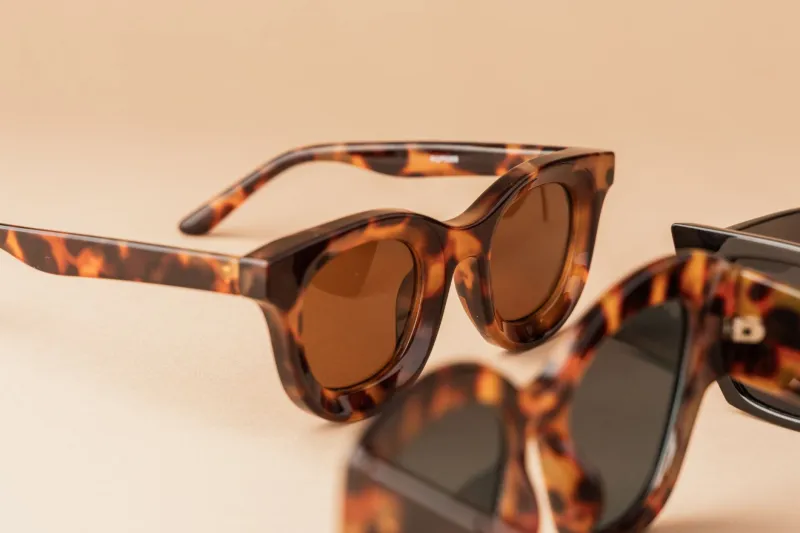
Tortoise never really leaves, but the 2026 version is softer and less orange than the old-school variety. A pale, honeyed tortoise with subtle flecks is easier to wear than a heavy, high-contrast pattern, and it works in every season. It is also forgiving: the mix of colours means it rarely clashes with an outfit, and it adds warmth to the face without looking like a makeup choice.
Styling note: soft tortoise is the easiest frame to wear with prints, denim and knitwear. Keep the shape classic — round, oval or a gentle cat-eye — and let the pattern do the talking. High-street pick: M&S and John Lewis own-label ranges often do good soft tortoise; check that the pattern is not too busy around the eyes.
5. Honey caramel: warmth without the orange
Honey caramel is a step warmer than soft tortoise, and it is brilliant for brightening a tired face on a grey morning. The key is to avoid anything too yellow or too orange; you want a toasted, slightly translucent brown that looks like it has been in the sun. It works especially well on warm and olive skin tones, and it is a nice alternative to black for people who find dark frames too severe.
Styling note: wear honey with cream, chocolate brown, denim and olive. It is a natural partner for gold jewellery. High-street pick: look for translucent acetate at Oliver Bonas or ASOS; the colour looks more expensive when the frame is slim rather than oversized.
6. Smoky mauve: the subtle wildcard
Smoky mauve is the shade for anyone who wants something different without going full novelty. It is a greyed purple that reads almost neutral in low light, then shows a soft violet edge in the sun. It is flattering on cooler skin tones and pairs well with grey, black, navy and silver. It is also a good bridge colour if you are bored of black but not ready for brown.
Styling note: keep it tonal. Grey coat, black knit, smoky mauve frame. High-street pick: Boots and Specsavers often carry this kind of muted trend colour in their fashion ranges; try it on in person, because mauve can look very different against different skin tones.
How to choose beyond summer
The mistake is to treat frame colour as a holiday purchase. In the UK, sunglasses are often a three-season accessory: they deal with low winter sun, spring glare and the bright, flat light of an autumn afternoon. Choose a colour that works with your coat and your everyday bag, not just your swimwear. If you are unsure, take a photo in daylight — not under shop lighting — and check whether the frame still looks good with your usual jacket.
And remember the fit. A great colour on a badly fitting frame will always feel wrong. Bridge width and temple length matter more than the trend cycle, so try before you buy if you can. The right shade should feel like it belongs to you in a grey car park as much as it does on a sunny terrace. That is the real 2026 test.