What a British Drizzle Actually Does to Your Frames (and What to Do About It)
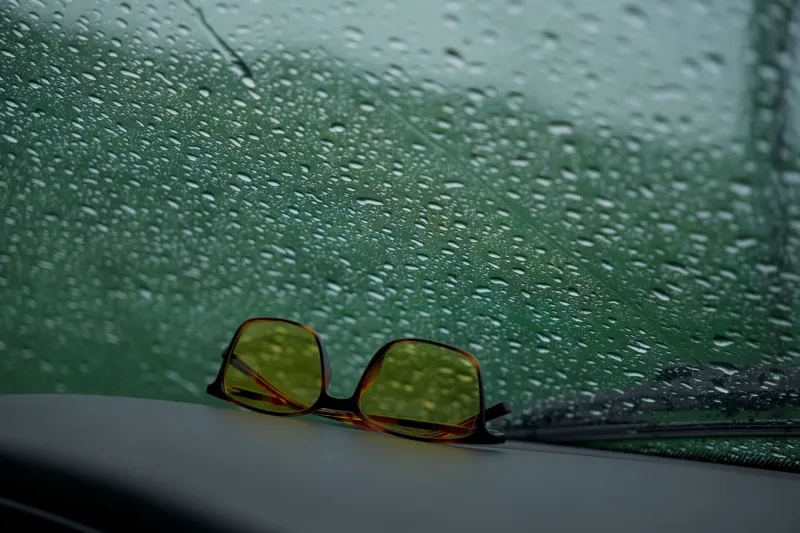
British wet weather has a particular talent for not looking that bad from indoors. The forecast says drizzle, the window says grey, and you head out in a jacket that turns out to be less waterproof than a paper bag. Your sunglasses, meanwhile, are doing a quiet job of coping with the damp — or quietly suffering. The difference between a pair that survives to see spring and one that develops a creaky hinge or a wonky temple usually comes down to materials, not luck.
This isn’t about wrapping your frames in cotton wool. It’s about knowing what acetate, metal and bio-plastic actually do when they get wet, then building a few habits that take less time than waiting for the kettle.
Acetate: lovely, slightly sensitive
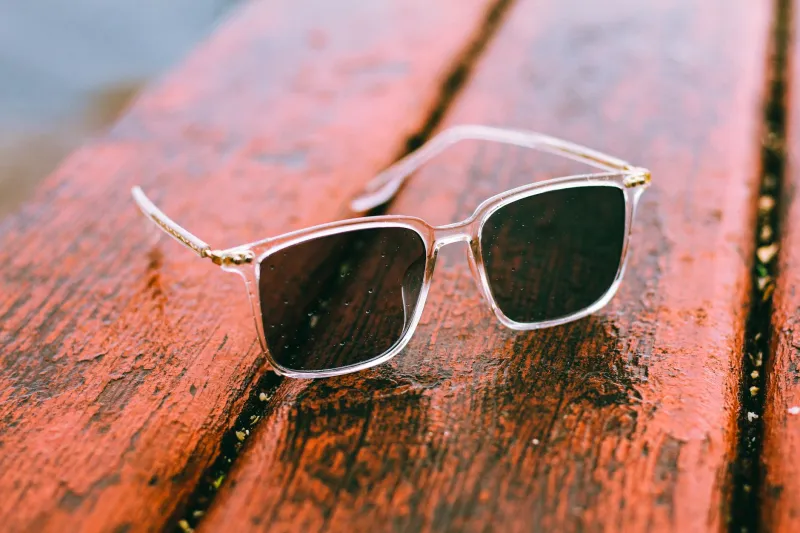
Acetate is the classic frame material for a reason. It takes colour beautifully, feels warm against the skin and can be polished back to a shine. It’s also the material most likely to notice a British winter. Acetate absorbs a small amount of moisture, and repeated wet-then-dry cycles can encourage subtle swelling, especially around the hinges and lens grooves. You probably won’t see a dramatic change after one rainy walk. You might see it after a month of leaving damp frames on a windowsill or in a bag pocket.
Cold makes acetate less forgiving, too. A frozen frame is more brittle than a room-temperature one, so avoid leaving your pair in the car overnight and then forcing the temples open first thing. Warping tends to show up as a frame that no longer sits flat on a table or a pair that suddenly feels tighter on one side.
Colour fastness is another slow-burn issue. Dyes in acetate are generally robust, but constant wetting and drying, plus UV exposure, can dull a finish over time. Darker tortoiseshell, olive and oxblood patterns hide this better than pale translucent colours, which is worth remembering if you want a pair that looks sharp after a muddy weekend walk.
Metal: corrosion hides in the hinges
Metal frames feel like the sensible choice for wet weather, and in many ways they are. Stainless steel and titanium are far less bothered by rain than acetate. But “metal” covers a lot of ground. Plated finishes, cheap screws and spring hinges are where the trouble starts. Water sits in the small gaps, and if the frame goes into a case damp, that moisture hangs around. Over time you can get corrosion around hinge screws, a stiff spring mechanism or a patchy finish on the temples.
Salt makes this worse. Winter roads are gritted, pavements are splashy, and if you live near the coast the air is already doing its thing. You don’t need to rinse your frames after every bus stop, but a quick dry of the hinges and bridge after a wet walk is more useful than a full wash. Avoid hot water on plated metal — it can soften adhesives and dull finishes. Lukewarm water and a microfibre cloth are plenty.
Bio-plastic: greener, not invincible
Bio-plastic and bio-acetate frames are a genuinely good development. They often use plant-based feedstocks and can feel very similar to conventional acetate. But they are not magically rain-proof. Many bio-plastics share acetate’s sensitivity to heat and moisture, and some are more prone to softening if left somewhere warm. A damp pair on a radiator is a bad idea for any frame, but it’s an especially quick way to encourage distortion in a bio-plastic one.
Hinge quality matters here as much as material. A bio-plastic frame with a well-made metal hinge will cope with a drizzly commute far better than a beautifully finished frame with a flimsy barrel hinge. Check that the temples open smoothly and that the screws aren’t already working loose. If you’re choosing between two similar pairs, the hinge is often the tell.
Lens coatings: the quiet casualty
Rain is only half the story. The other half is what you do with the cloth. Grit, road spray and dust collect on lenses, and if you wipe a dry, dirty lens you can scratch the coating. Anti-reflective layers, hydrophobic treatments and mirrored finishes are all doing useful work — until they’re abraded. Once a coating is scratched, rain beads less effectively and glare becomes more noticeable.
Use a clean microfibre cloth and a lens spray, and avoid the old breath-and-sleeve method. If your lenses are properly wet, rinse them with lukewarm water first, then dry. Hot water can damage some coatings and frame finishes, so keep it tepid. And if you’ve been out in the rain, don’t shove the frames into a case still dripping. Give them a quick dry first.
Colour and finish: what fades, what holds
Colour fastness is not just about dye. It’s about finish. Anodised metal tends to hold its colour well, but scratched or chipped plating can expose a duller layer underneath. Acetate can lose a little depth over seasons of wet-dry cycling and UV exposure, especially in lighter translucents. Bio-plastics vary widely — some are excellent, some are more sensitive — so buy from brands that are clear about their material and offer spares or repairs.
If you want a pair for drizzly commutes and weekend walks, mid-to-dark tones are the practical choice. Tortoiseshell, olive, slate and oxblood all wear their age more gracefully than frosty pastels. They also look good with a wet-weather wardrobe, which is a bonus rather than the main point.
A 90-second wet-weather routine
When you come in from the rain, shake off the worst of the water. Dry the frame with a clean microfibre cloth, paying attention to the hinges, bridge and lens grooves. Leave the frames out of the case for twenty minutes so any trapped moisture can escape. Don’t put them on a radiator, windowsill in direct sun or anywhere else that turns a gentle dry into a heat treatment. If the hinges feel stiff, a tiny drop of suitable lubricant — not WD-40 — can help, but don’t overdo it.
Choosing a frame that shrugs off the weather
For a wet British winter, look for acetate or bio-acetate with solid metal hinges and a finish you can polish. Metal frames are fine if the plating is good and the screws are accessible for occasional tightening. Avoid ultra-thin temples that flex too much in the cold, and skip any pair that feels brittle when you open it. Style still matters, of course. A chunky tortoiseshell frame with a slightly deeper lens looks good on a drizzly high street and gives you a bit more coverage when the sun finally breaks through. But the real test is whether the frame feels solid in the hand. If it does, it will probably handle the rain better than the forecast suggests.