Horizon Glare, Wet Tarmac: Winter Driving Shades That Earn Their Place
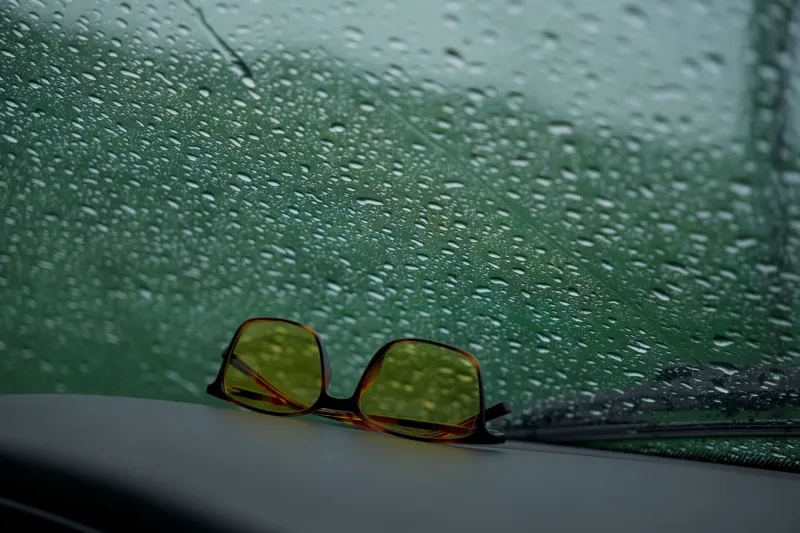
There’s a particular kind of British winter driving misery that has nothing to do with ice or fog. It’s the moment you turn onto a westbound A-road at twenty past four, the sky overhead is the colour of a dishcloth, and the sun has parked itself directly on the tarmac ahead. The visor does nothing. The wipers make it worse. And the sunglasses that looked so good on the school run suddenly feel like a fashion accessory with no interest in road safety.
Driving into a low winter sun is a specific problem, and it deserves a specific pair of sunglasses. Not necessarily an expensive pair — but one chosen for the way light behaves at this time of year, rather than for how it looks in a café window.
The glare is at the horizon, not the top of the sky
Summer sunglasses are often designed around overhead brightness: dark tints, big lenses, a bit of style swagger. Winter glare is lower and more horizontal. It comes at you across wet tarmac, off the bonnet of the car in front, and through the side window as you check a junction. The sky can be dull while the road ahead is genuinely blinding.
That means coverage matters as much as tint. A pair that sits close to the face and wraps slightly around the temples will cut more of that low, side-on bounce than a narrow aviator with a generous gap at the cheek. You don’t need a ski goggle, but you do want a frame that blocks light from the edges without narrowing your view of the road.
Polarisation: brilliant at the right job, not a magic wand
Polarised lenses are the ones that cut reflected glare from flat surfaces — wet roads, glossy bonnets, puddles, the backs of white vans. For winter driving, that’s genuinely useful. It can make the road markings and kerbs easier to read when the surface is doing its best impression of a mirror.
But polarisation is not a force field against direct sun. If the sun is sitting right on the horizon, no polarised lens will let you stare into it comfortably. It also isn’t automatically the best choice for every car. Some dashboard displays, head-up units and infotainment screens can look odd through polarised lenses, and a few drivers find certain windscreens produce faint patterns. Test a pair in your own car before committing. If the screen goes dim or patchy, that’s not a quirk you want to discover on the M25 at dusk.
Amber, brown and gradient: colour with a purpose
Lens colour changes the way contrast feels. Grey is neutral and calming: good for bright, clear days when you want colours to stay true. Brown and copper warm things up and can make flat, grey light feel less mushy. Amber is the classic choice for low-contrast conditions, but it can look a bit retro and isn’t to everyone’s taste. For winter driving, a brown or copper tint is often the practical middle ground — enough contrast boost without turning the world into a sepia photograph.
Gradient lenses need a caveat. The fashion version is darker at the top and lighter at the bottom, which can look elegant and let you glance at the dashboard without taking your shades off. But when the sun is low, that lighter lower half is exactly where the glare is coming from. A strong gradient may leave the horizon under-filtered. For driving, a mild gradient or a solid tint is usually more sensible than a dramatic fade.
Coverage beats cool behind the wheel
This is where the school-run pair and the A-road pair part company. A slim, stylish frame with thin temples can be lovely for a coffee run, but it won’t do much about light leaking in at the sides. A wider frame with thick temples and a close fit will block more of that low winter glare — though you don’t want something so chunky that it feels like blinkers. Peripheral vision matters.
Look for a pair that sits securely without pressing on the bridge of your nose, and check that the temples don’t interfere with your car’s headrest or your over-ear headphones. If you wear prescription glasses, a prescription sun pair or a well-fitting over-the-top style is worth the faff. Squinting through non-prescription shades over your normal specs is a false economy.
The dashboard is part of the problem
You can blame the sun all you like, but a dirty windscreen and a shiny dashboard are co-conspirators. Winter grime on the inside of the glass turns low sun into a smear of haze. A light-coloured dashboard can bounce light straight back at you. So can a phone left face-up on the passenger seat.
Give the inside of the windscreen a proper clean, keep the dashboard matte where you can, and put the phone away. If your car has a sun visor, use it in combination with your sunglasses rather than expecting the shades to do everything. A polarised lens can help with dashboard reflections, but it can’t fix a windscreen that hasn’t been cleaned since August.
The practical checklist
If you’re choosing a pair specifically for winter driving, keep it simple. Go for a frame with good side coverage and a close fit. Choose a brown, copper or neutral grey lens rather than something very dark; you still need to read the road when the sun dips behind a cloud. Consider polarisation if you do a lot of wet-road driving, but test it with your dashboard displays first. Avoid very strong fashion gradients for low-sun driving. And never wear dark lenses at dusk or in failing light just because they’re already on your face.
The pair that looks best on the school run can still be the pair you love. It just might not be the pair for the A-road home. A dedicated driving pair — kept clean, checked for fit, and chosen for horizon glare rather than holiday glamour — is one of those quiet winter upgrades that makes the whole commute feel less like a squint.