Mud, Bobble Hats and Blinding Light: Pitchside Shades for Winter Rugby
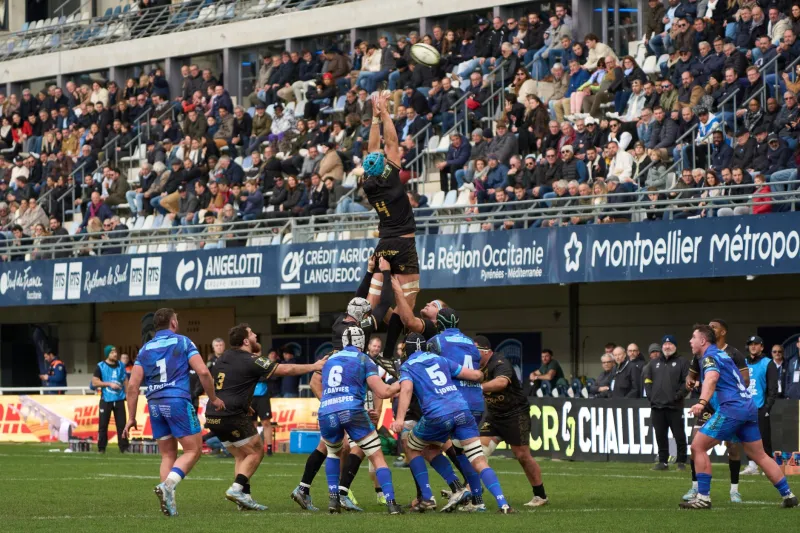
There is a particular kind of light at a winter rugby match. It arrives low over the clubhouse roof, catches the standing water in the middle of the pitch, and turns the far touchline into a shimmering white smear. Add a wet ball, a referee in a bright shirt and a dozen parents in padded coats, and you have a genuinely difficult few hours for your eyes.
Which is why the sunglasses you take to a Saturday fixture deserve more thought than the pair rattling around in the glovebox. This isn't about looking like you're about to run out for the second half. It's about seeing the game properly, keeping your hands free for the flask, and looking like a person who thought about it.
First, deal with the glare that actually exists
Forget Mediterranean beach sunshine. The glare that hurts at a British ground in winter is reflected — off wet grass, off a slick 3G surface, off puddles along the touchline and off the pale concrete of the clubhouse steps.
That is squarely a job for polarised lenses. A polarised filter knocks out horizontally reflected light, so the sheen on a wet pitch flattens out and you can actually track the ball through the air rather than guessing where it will reappear against the sky. Grey lenses are the neutral, honest choice — they darken without shifting colour, which matters when you're trying to tell a navy shirt from a black one at forty metres.
Brown or copper bases are the friendlier option on flat, overcast days. They lift contrast, so a muddy ball against a muddy pitch reads more clearly than it has any right to. On a grim, low-cloud afternoon in February, a category 2 brown lens will often serve you better than a dark category 3 grey, because you're not fighting brightness so much as definition.
Do look for EN ISO 12312-1 marking when you buy. It's the basic assurance that the lens does what it claims.
The fit problem nobody warns you about
Here's the practical wrinkle: you are wearing a hat. Probably a wool one, possibly with a pom on top, and almost certainly pulled down over your ears.
That changes everything about how a frame sits. Temples that fit perfectly in September suddenly feel tight by half past two, and metal arms pressed against a hat band will make themselves known well before full time. Wrap-style frames with slim, sprung temples cope far better than thick acetate arms, and a slightly curved shape also blocks the side-on glare that comes off the pitch when play moves across your field of view.
Rubberised nose pads are worth paying for. Cold fingers plus a smooth acetate bridge equals a pair of sunglasses on the floor, and a muddy touchline is not where you want to be crawling around on your hands and knees.
If you're the sort of person who takes them off every five minutes to talk to somebody, consider a simple retainer strap. It sounds deeply unfashionable; worn under a scarf it is invisible, and it means you can shove the frames up onto your hat between plays without posting them into the mud.
A word on mirrors, and on not overdoing it
Mirrored lenses look superb. They also catch the light in a way that reads, pitchside, as slightly theatrical — the visual equivalent of turning up in full training kit to watch your nephew's under-11s.
That said, a subtle silver or smoke mirror on a black wrap frame is perfectly good taste, particularly if the rest of your outfit is doing very little. The general rule: let one element be interesting. If your coat is a proper padded number and your scarf is club colours, the sunglasses should be the quiet one in the conversation.
Colours that work with a scarf, not against it
Club scarves tend to be loud — stripes, hoops, clashing primaries. Sunglasses that fight them look accidental.
Sensible anchors: matte black, tortoiseshell, dark olive, deep burgundy, slate grey. All five sit happily alongside navy, green, maroon and whatever unholy combination your club's kit designer settled on in the nineties.
Avoid bright white frames unless you're making a deliberate statement, and avoid anything too skinny. Fine metal frames disappear under a hat and a hood and leave you looking oddly bare-faced; a frame with a bit of substance holds its own against a padded coat collar.
If you want to nod to your club without going full replica, a burgundy or forest-green acetate is a far more elegant gesture than a logo on the lens.
What to do with them when the whistle goes
Standing around afterwards, pint in hand, sunglasses on your face indoors is a look that rarely lands. The clubhouse is dim, the windows are steamed up, and you will spend the whole conversation tilting your head to see past your own tint.
Bring a hard case with a clip or a lanyard loop, tuck the frames in, and put them in an inside pocket rather than the outside one your car keys live in. The single most common cause of dead sunglasses isn't the sun — it's a scratched lens from a set of keys in a coat pocket.
And if you're driving home in the dark at half four, don't leave a dark pair on the passenger seat as a temptation. Swap to clear or simply put them away properly.
The short version
Polarised grey for bright, low sun over wet ground. Brown or copper if the day is flat and grey. A slim wrap with sprung temples that tolerates a bobble hat. Rubber nose pads, a retainer if you're fidgety, and a case in an inside pocket. Colours that behave themselves next to a scarf.
Get those five things right and you'll spend the match watching rugby rather than squinting at it — which, on a frozen Saturday in the middle of nowhere, is the whole point.