Sea Air and Weak Sun: Packing Sunglasses for a Two-Night Coastal Break
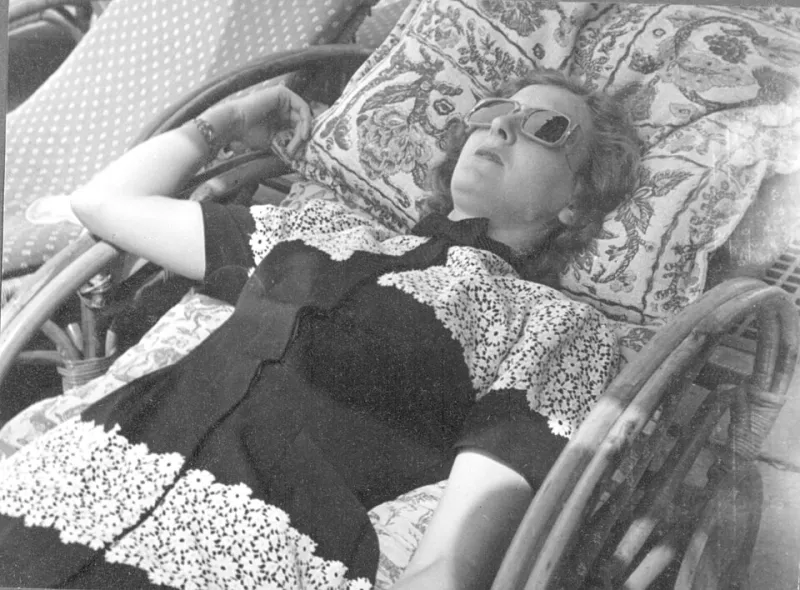
Photo: Eva Braun, Public domain, via Wikimedia Commons
There's a particular kind of British coastal weekend: two nights, one unreliable forecast, a bag that's mostly jumpers, and a determination to walk the front whatever the sky is doing. It is also, quietly, one of the toughest outings your sunglasses will ever have — worse than a fortnight in town.
Here's why, and what to take.
The coast is not the city
Inland, light tends to come from above. On the coast it comes from above, from a sheet of moving water, from wet sand, from the windows of every seafront café and, when the tide is out, from a mile of glistening mudflat that behaves like a mirror.
Add wind, salt and the fact that you'll be outdoors for six hours straight, and the demands are different. You need more glare control than usual, better fit than usual, and a care routine you'll actually bother with after a day of walking.
Glare off wet sand is the main event
Wet sand at low angle is brutal. The reflection arrives from below, which is exactly the direction most sunglasses are least designed for. Tinted lenses darken it but don't remove it; polarised lenses cut it dramatically, particularly when the sun is at roughly forty-five degrees and the whole beach turns into a light show.
If you buy one pair specifically for coastal weekends, make it polarised. Grey or green keeps the sea looking like the sea rather than a sepia postcard, and category 3 gives you enough headroom for those unforecast bright afternoons.
Salt is the quiet enemy
Sea air doesn't just sit on your frames — it dries into a fine crystalline film. On metal you'll see it as dulling around the hinges; on acetate you'll feel it as a slight grit when the arms fold. Left alone through a winter, that film is a slow route to stiff hinges and pitted coatings.
Rinse in fresh water at the end of the day. Not hot, not soapy unless you're being thorough, and never a beach towel, which is essentially sandpaper with a nautical print. A microfibre cloth lives in the case; use it.
Wind decides whether you enjoy the promenade
A blustery front is where fit becomes a personality trait. Frames that grip slightly behind the ear and sit close to the brow stay put; anything loose will be pushed up your face by the time you reach the third beach hut.
Wraparound and shield shapes win on pure aerodynamics, and they've been stylistically forgiven in recent years, but a close-fitting acetate with a keyhole bridge and properly curved temples will do the job without looking like you've wandered off a cycling holiday. If you're between sizes, go smaller — a snug frame that doesn't move will always beat a generous one that does.
The weekend capsule: three pairs
The walker. Polarised, category 3, close-fitting, ideally a wrap or a rounded square with curved arms. This is the pair for the beach, the cliff path and the inevitable ice cream in a force five.
The pub pair. Something with a bit more polish — a slim metal aviator, a soft cat-eye, a fine round frame in tortoiseshell. Beach-to-harbour transitions are entirely about how the frame reads with a waxed jacket and a pint glass, so pick the one you'd wear to a lunch that wasn't at the seaside.
The spare. A flat-folding pair or a cheap lightweight you won't mourn. Beach bags, glove compartments and coat pockets destroy sunglasses with quiet efficiency, and having a spare means the good pair stays in its case after dark.
The five-minute evening routine
Rinse the frames under a cool tap. Shake off the worst, blot with microfibre rather than rubbing, and leave them open on the windowsill to dry overnight — not folded on a radiator, which softens acetate and warps temples over time.
If you've been in the sea, rinse twice. Saltwater plus sunscreen is the combination that clouds coatings fastest, and a lens that's gone slightly milky in the corner is the sort of thing you notice every single time afterwards.
What to leave at home
Anything precious, anything vintage, anything with a hinge you already know is slightly loose. Coastal weekends are where small faults become large ones, and a two-hundred-quid pair of 1970s frames is not improved by a pocketful of sand.
Take three, use two, and treat the case as part of the outfit rather than an inconvenience. It's the cheapest insurance in the bag.