Sun Between Stations: Smart Sunglasses Habits for the Daily Commute

The commute is its own little weather system. You leave home in flat November light, get hit by a low sun on the walk to the station, step into a carriage where everyone is squinting at their phones, and then arrive at an office where the windows seem designed to bounce glare straight onto your screen. By the time you head home, it is dark and drizzling. Sunglasses can feel like leftover holiday kit in all of this, but they do not have to.
With the right pair and a few sensible habits, sunglasses become part of the daily uniform rather than a forgotten item at the bottom of a bag. The aim is simple: cut the glare, protect your eyes and still look like you meant it.
The commute has its own kind of light
British winter sun is low, bright and often exactly at eye level. It comes at you sideways across wet pavements and reflects off car windows, bus shelters and glass-fronted buildings. That is before you add the office window that turns your monitor into a mirror at 3pm. You do not need blackout lenses for this. You need something that takes the edge off without making the world feel like dusk.
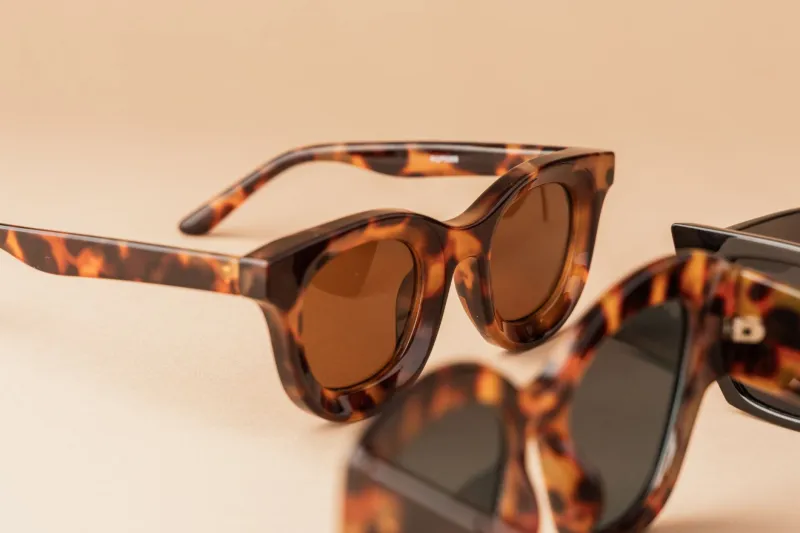
A grey or green lens is a good everyday choice because it keeps colours fairly natural. Brown and amber lenses can make grey streets feel a little warmer, which is no bad thing in February. For bright, low-angle sun, a category 2 or 3 lens is usually enough. Just do not wear dark lenses after sunset; they reduce visibility when you need it most.
Light-adaptive lenses are the commuter's friend
Photochromic or light-adaptive lenses darken when UV light hits them and clear up indoors. They are not magic, and they do not replace a proper pair of sunglasses in strong summer sun, but they are genuinely useful for the stop-start nature of a commute. You can walk to the station in bright light, step onto a train and not feel like you are wearing a disguise.
If you spend a lot of time near water, wet roads or glass, polarised lenses are worth considering. They cut reflected glare, which can make a rainy pavement or a bright office window much easier on the eyes. Anti-reflective coatings on the back of the lens also help, especially when the sun is behind you and bouncing straight back into your face.
Packable does not have to mean flimsy
Folding frames and slim metal styles are the obvious commuter choices because they slide into a bag without taking over. But do not sacrifice the hinges for the sake of a few grams. A folding frame with a loose joint is a false economy. Look for spring hinges if you can, and check that the frame feels solid when open. Thin metal aviators, slim rectangles and compact round frames all pack down well and look sharp with a work coat.
If you wear a helmet or cycle part of the route, choose a pair that grips properly and does not fog instantly at traffic lights. For everyone else, the main rule is simple: the glasses should be easy to put on and take off with one hand, without feeling like you are unfolding a deckchair.
Storage that saves your lenses
Most commuter sunglasses are ruined not by style but by neglect. Do not shove them loose into a coat pocket with keys and a travel card. Do not balance them on top of your head for the whole journey, either; it stretches the temples and invites a fall onto the platform. A hard case is best, a semi-rigid pouch is acceptable, and a microfiber cloth should live in the case with them.
Clean lenses with the cloth, not a tissue or the edge of your scarf. If they get wet in the rain, dry them properly rather than letting water dry in streaks. And never leave them on the dashboard of a car or on a hot radiator; heat warps frames and damages coatings.
Quick style moves for the 8:17
Commuter sunglasses should look deliberate, not like you are still dressed for a beach bar. The easiest route is to keep the frame simple and let it sit with your normal work clothes. A slim metal frame works with a wool coat and a scarf. A plain acetate rectangle looks neat with a blazer and trainers. A round wire frame softens a practical raincoat. Avoid oversized mirrored lenses for the office run unless your workplace is genuinely that glamorous.
If you are going straight from Tube to team meeting, take the sunglasses off before you walk in and store them properly. Perched on the head is fine for a photo, less fine for a meeting. A quick check in the lift mirror is also worth it: smudged lenses and a wonky frame undo the whole look.
A small commuter kit
Keep a tiny sunglasses kit in your bag: a hard case, a microfiber cloth and a lens wipe. If your frames have screws, a mini screwdriver is a useful addition, though most people can live without one. In winter, a spare cloth is genuinely handy because rain, condensation and pocket lint all conspire against clean lenses.
The weather plan
The British commute rarely gives you one condition for the whole journey. Carry a pair that can handle change: light-adaptive lenses if you move between indoors and out, polarised lenses if glare is the main enemy, and a case that protects them when the sun disappears. If the forecast is truly grim, leave the good pair at home and take a packable spare.
Sunglasses on the commute are not about pretending it is July. They are about handling the light you actually get, looking composed while you do it, and arriving at your desk without squinting. That is a modest ambition, but on a dark November morning it makes a surprising difference.