Sunroom Squint: Why Glass-Roof Rooms Need a Different Kind of Sunglasses
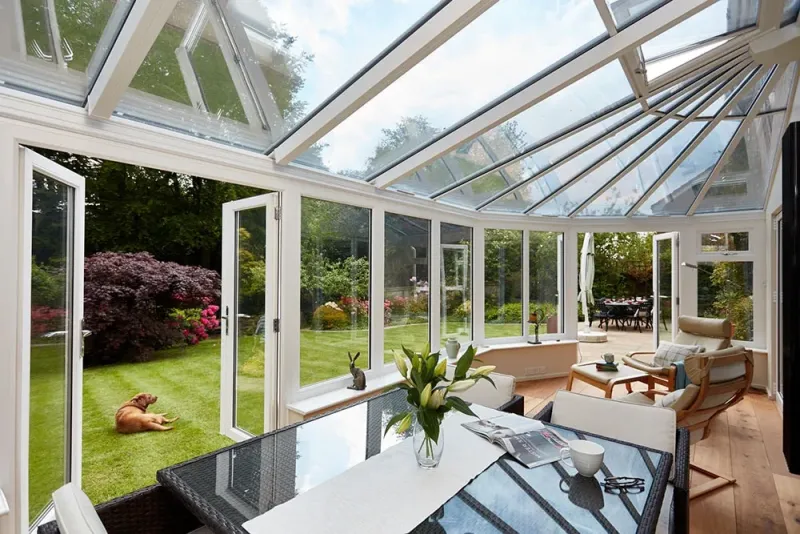
Photo: conservatory sunlight through glass roof sunglasses on table UK, via www.anglianhome.co.uk
There’s a particular kind of British winter brightness that catches you off guard. You’re not on a mountain. You’re not even outside. You’re sitting in a conservatory with a cup of tea, and the low sun is bouncing off the glass roof, the glossy table and someone’s phone screen all at once. Suddenly the fashion pair you grabbed on the way out feels less like a style choice and more like a prop from a noir film.
Glass-roof rooms are brilliant. They’re also glare machines. A conservatory, a garden-centre café, a brunch spot with floor-to-ceiling windows — all of them can serve up more reflected light than a pavement in August. The trick is choosing shades that cope with that shifting indoor-outdoor light without turning your face into a blacked-out visor.
Why a glass roof changes the glare game
Ordinary windows filter some of the sun’s energy, but they don’t make glare disappear. Low winter sun hits glass at an angle, and the result is a mix of direct light and reflection. Add double glazing, a pale floor, a shiny tabletop and a few metal chair legs, and your eyes are doing unpaid overtime.
UV is a separate issue. Standard glass blocks most UVB, but it doesn’t block all UVA, and not every tinted lens is a proper sunglass lens. If a pair has dark plastic but no UV400 label, it’s mostly just dimming the view while your pupils open wider. That’s not a bargain. That’s a headache with a hinge.
For indoor-outdoor glare, you want a lens that cuts the sting without making the room feel like dusk. Category 2 lenses are the sweet spot for many people: dark enough for bright winter sun, light enough that you can still find your teacup. Category 3 is better for the garden or a long walk, but it can feel heavy in a café. Category 4 is a no indoors — and honestly, a no for most British driving too.
The lens shortlist for shifting light
Grey lenses are the neutral option. They dim everything evenly, so colours stay recognisable and you don’t spend the afternoon wondering why the Christmas tree looks radioactive. Green lenses do something similar with a slightly softer feel. Brown and amber lenses add contrast and warmth, which can be lovely in low sun, though they’ll tint the whole room sepia.
Polarisation is the quiet hero here. It cuts reflected glare from flat surfaces — tables, car bonnets, wet pavements, conservatory floors — rather than just making everything darker. If you’ve ever squinted across a garden-centre café while a low sun bounces off the patio, polarised lenses are the difference between a pleasant coffee and a face ache.
One small warning: some older phone screens, car displays and ticket machines can look odd through polarised lenses. It’s rarely a dealbreaker, but test it before you commit if you spend a lot of time staring at dashboards.
Photochromic lenses are worth a mention for the conservatory-to-car shuffle. They darken outdoors and lighten indoors, which suits the British habit of doing three things in one trip. Just don’t expect them to turn into full blackout shades in a glass box. They’re a convenience, not a magic trick.
Frames for the quick dash to the car
A conservatory pair doesn’t need to be technical, but it should be easy. Lightweight acetate or slim metal frames sit comfortably for an hour with a book. Secure temples matter more than you’d think — nobody wants to be the person chasing a pair across a garden-centre car park in a December wind.
If you’re going in and out, avoid enormous oversized frames that catch on scarves and bobble hats. A medium-sized shape with a close fit is more practical. A gentle wrap or a slightly curved frame can help block side glare from windows, but full shield sunglasses indoors can look like you’ve misread the dress code.
This is also where frame colour earns its keep. Translucent olive, warm tortoiseshell, soft grey and oxblood all feel more indoor-friendly than an opaque black mask. They still do the job, but they don’t announce that you’d rather be anywhere else.
The Christmas family test
Here’s the scene: the conservatory is full, the low sun is coming through the roof, and someone has decided it’s time for a group photo. You want glare relief, not a reputation. A category 2 polarised lens in a warm frame is the sensible compromise. You can see the room, the expressions and the plate of mince pies without squinting.
If you’re the one carving the turkey, take the sunglasses off. That’s not a lens rule; that’s a family rule.
The other useful habit is keeping one pair by the conservatory door and one in the car. Not a collection. Just a pair that lives where the glare happens, so you’re not hunting through coat pockets while everyone else is already in the garden. Wipe them with a microfibre cloth, keep them out of direct heat, and don’t leave them on a radiator just because the room is warm.
Glass-roof rooms are one of Britain’s great indoor pleasures — bright, plant-filled and slightly too hot by 2pm. With the right lenses, they’re also a lot easier on the eyes. The goal isn’t to hide. It’s to see the room clearly, look like yourself and still enjoy the sun when it decides to move indoors.