Silver Linings, Grey Pavements: The Case for Mirrored Lenses After October

Photo: Liyannalee, CC BY-SA 4.0, via Wikimedia Commons
Mirrored sunglasses have a bit of an image problem in Britain. They get bundled into the same mental category as ski passes, festival wristbands and that one friend who says ‘just booking flights’ in January. Then November arrives, the sun drops behind the rooftops at about 3.30pm, and a reflective lens starts to look less like holiday kit and more like a sensible response to a very specific kind of British light.
So can mirrors work in a British winter? Yes, but not every mirror, and not every day. The trick is understanding what the coating is doing, choosing a frame that belongs on a high street rather than a ski lift, and building the rest of the outfit around it. Get those three things right and a mirrored pair earns its place between now and spring.
What a mirror coating actually does
A mirror finish is not the same thing as a tint. It is a thin reflective layer applied to the front of the lens, and it bounces some light away before it reaches your eye. Depending on the coating and the base tint, that can knock down visible light by an extra 10 to 25 per cent. Grey bases keep colours fairly neutral, brown bases warm things up and add contrast, and green bases tend to feel calm and restful.
One important point: a mirror does not automatically mean a lens is polarised. Polarisation is what tackles horizontal glare bouncing off wet roads, car bonnets and puddles. If you want both, look for a lens described as mirrored and polarised. For winter use, that combination is often the sweet spot, especially on bright, crisp mornings when the pavement is doing its best impression of a mirror itself.
A heavy silver mirror on a dark grey base is excellent for sharp, low sun. A lighter rose or copper mirror on a brown base is easier on flat, grey days when you still want a bit of warmth. The mistake is assuming every mirror is a summer lens with extra attitude. Some are genuinely useful in low light; others are just very shiny.
The winter glare problem
British winter light is not summer light. It arrives sideways, skims across wet tarmac and bounces off bus windows, puddles and the bonnets of parked cars. That is exactly where a mirror can help. It cuts the overall brightness of a low sun that seems to sit directly behind the bus shelter, and it takes the edge off reflected glare from wet surfaces.
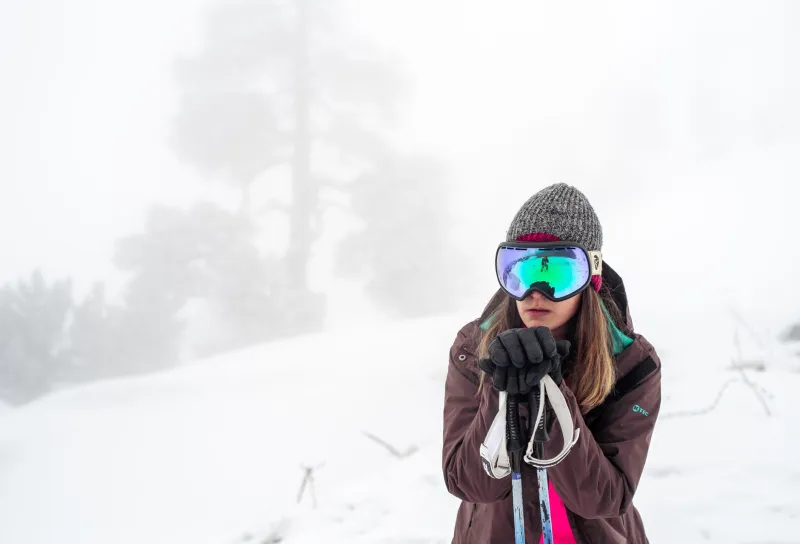
Where mirrors do not help is fog. In thick, pea-soupy conditions, a reflective lens can make things feel murkier rather than clearer. This is not a lens for every grey day; it is a lens for the bright, cold, annoying-glare days that make you reach for the visor in the car. If you are driving, check that the pair is suitable for road use and keep a spare non-mirrored pair in the glovebox if you are unsure.
For 2026, the useful shift is towards subtler mirror finishes rather than full-on ski-slope silver. A soft smoke mirror or a muted bronze coating looks less like a piece of sporting equipment and more like a deliberate style choice.
Frame shapes that keep mirrors out of holiday territory
The fastest way to make mirrored lenses look like fancy dress is to pair them with a neon rim, a wraparound shield and a logo the size of a bus ticket. You do not need to go full accountant, but you do want a frame that feels at home with a wool coat.
Slim metal aviators with a smoke mirror are an easy starting point. Angular acetate squares in black, tortoise or slate work well with silver mirrors and look sharp against a tailored coat. Round wire frames with a copper or rose mirror feel softer and pair nicely with chunky knitwear. If you like a cat-eye, keep the mirror light and the frame colour deep rather than pastel.
Colour is your friend here. Instead of bright white or fluoro frames, look at olive, oxblood, charcoal, slate and dark tortoise. These shades sit comfortably with winter wardrobes and stop the mirror from doing all the talking. Keep temple details minimal, too. A thin metal temple slipping under a hat or hood is far less faff than a thick, sporty arm.
Coat, knit, rain layer: three pairings that work
The wool overcoat. A charcoal or camel coat with a slim square acetate frame and a silver mirror is a clean, city-friendly combination. Keep the rest simple: a scarf, a plain knit, perhaps a leather bag. The mirror becomes the one shiny thing in an otherwise matte outfit.
The chunky knit and jeans. This is where a round metal frame with a copper or bronze mirror comes into its own. It warms up the face, looks relaxed rather than try-hard, and works with boots and a heavy scarf. If you are wearing a cream or oatmeal knit, a brown-based mirror feels much more natural than an icy silver one.
The wet-weather parka. A matte black or olive shell with a smoke mirror in a close-fitting frame is the practical option. Avoid enormous lenses that clash with the hood and fog up the moment you step onto the bus. A pair that sits close to the face and has a slim temple is easier to live with when the rain is coming in sideways.
The small print: scratches, fingerprints and the school run
Mirror coatings are not invincible. They show fingerprints, they show scratches, and they really show it if you shove them into a bag without a case. Use a microfibre pouch, avoid wiping grit across the lens with a tissue, and do not leave them face-down on a café table. The coating sits on the front, so treat that surface with a bit of respect.
For the school run or a commute that involves a rucksack, a lighter mirror on a brown base is often more forgiving than a dark silver one. It is bright enough for the low sun but not so specialised that you feel ridiculous in the queue for the bus. And if you are the sort of person who loses things, a cheaper second pair for the car or the coat pocket is not a bad idea.
The verdict
Mirrored lenses can absolutely work in a British winter. They are not a cure-all for fog, and they are not the right choice for every dull afternoon. But on those clear, cold days when the sun is low, the roads are wet and the glare is doing its best to ruin your walk to the station, a well-chosen mirror is a genuinely useful bit of kit.
Choose the base tint carefully, look for polarisation if you are dealing with wet roads, and keep the frame quiet. A silver mirror with a grey base and a wool coat is not a cry for a ski trip. It is just good winter dressing.